

Virtual IOP treats your alcohol and substance use disorder through structured, clinician-led care delivered over live video. You’ll typically commit 9 to 15 hours weekly, combining group therapy, individual counseling, relapse prevention, and skills training. Programs emphasize abstinence, stabilize early sobriety, and integrate medication-assisted treatment when appropriate. They also address co-occurring anxiety, depression, and trauma. Research shows outcomes comparable to in-person care. Understanding how each component works can help you decide what’s right.
Key Takeaways
- Virtual IOP treats alcohol and substance use through structured, clinician-led care via live video, combining group therapy, individual counseling, relapse prevention, and skills training.
- Programs typically require 9 to 15 weekly hours, often three hours per day, three days per week, with flexible morning, afternoon, or evening options.
- Treatment emphasizes abstinence-focused recovery, integrates medication-assisted treatment when appropriate, and addresses co-occurring conditions like anxiety, depression, and trauma simultaneously.
- Research shows virtual IOP produces outcomes comparable to in-person care in retention, abstinence, therapeutic alliance, and long-term recovery.
- An initial clinical assessment determines fit; detox or residential care may be needed first if withdrawal risk or instability exists.
How does virtual IOP treat alcohol and substance use

Virtual IOP treats alcohol and substance use through structured, clinician-led care delivered through live video sessions, sitting between inpatient care and standard outpatient therapy. Your treatment typically combines group therapy, individual counseling, relapse prevention, and skills training, often totaling 9 to 15 hours weekly. A common format runs three hours per day, three days per week, though schedules vary by provider.
If you’re managing moderate to severe alcohol use disorder, programs often emphasize abstinence-focused recovery and stabilization during early sobriety. Many integrate medication-assisted treatment support and medication management when appropriate. Because co-occurring conditions like anxiety, depression, and trauma frequently accompany substance use, you’ll often address these simultaneously. Some programs also incorporate CBT, DBT skills, and repeated abstinence monitoring to track your progress.
Why online IOP works for substance use disorders
Online IOP works for substance use disorders because it produces results comparable to in-person care. A published cohort study followed adults for up to one year after discharge from in-person versus virtual IOP, comparing outcomes for alcohol and substance use treatment. Provider summaries of peer-reviewed findings report no significant differences between virtual and in-person delivery across retention, abstinence, therapeutic alliance, and long-term recovery sustainability.
Online delivery works because it preserves the core clinical components, group therapy, individual counseling, relapse prevention, and skills training, while removing travel barriers. You keep the residential-like structure without leaving home, work, or school. When you distinguish peer-reviewed evidence from marketing claims, virtual IOP holds up as a legitimate treatment option.
What relapse prevention looks like virtually

Virtual relapse prevention looks like live video sessions where you learn to identify your personal triggers, high-risk situations, and early warning signs. Your clinician guides you through evidence-based skills drawn from CBT and DBT, helping you build coping strategies you apply in real time at home, work, or school. You practice refusal skills, craving management, and stress regulation, then rehearse them where you actually live. Many programs pair this with repeated abstinence monitoring and medication management when appropriate. Group sessions let you exchange strategies with peers facing similar challenges. Because you’re practicing recovery in your daily environment rather than a facility, you strengthen the exact skills you’ll need after discharge.
How group work supports substance use recovery
Group work supports substance use recovery by reducing the isolation that drives substance use through structured, clinician-led interaction. When you join a live video group, you’re engaging in work that connects you with others who understand recovery. You hear how others manage cravings, high-risk situations, and early abstinence, and you practice applying those strategies yourself.
Group work builds accountability. You commit to goals in front of peers who understand the recovery process, which strengthens follow-through. You also develop communication and coping skills through real-time feedback.
Virtual delivery doesn’t weaken these mechanics. Secure, HIPAA-compliant platforms let you participate from home while maintaining the therapeutic alliance that research links to retention. Groups typically run alongside individual counseling and skills training, giving you consistent peer support throughout the program’s duration.
How virtual IOP compares with in-person for SUD
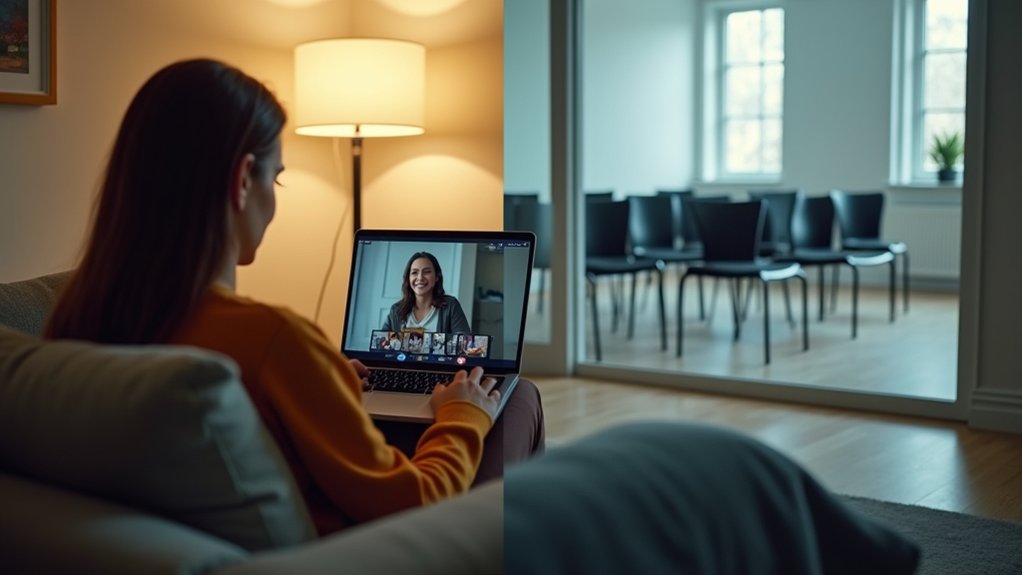
Virtual IOP measures up well against in-person treatment for substance use disorders. A published cohort study followed adults for up to one year after discharge from in-person versus virtual IOP. Provider summaries of peer-reviewed findings report no significant outcome differences across several key measures. Virtual IOP for depression offers flexible access to mental health care for those who struggle with traditional therapy. Real-time online support can make treatment more accessible and help improve mood and overall well-being.
| Outcome Measure | Virtual vs. In-Person |
|---|---|
| Retention | No significant difference |
| Abstinence | No significant difference |
| Therapeutic alliance | No significant difference |
| Long-term recovery | No significant difference |
Virtual delivery removes travel and geographic barriers while preserving structured, clinician-led care. It’s important to distinguish provider claims from peer-reviewed evidence, since marketing language sometimes overstates results. If you need intensive support but not inpatient placement, virtual IOP offers comparable structure without residential requirements. The choose best virtual IOP can offer flexible, convenient treatment for those balancing recovery with daily responsibilities. Online access makes structured therapy and professional support easier to reach.
When substance use needs detox or residential first
Some substance use requires detox or residential treatment before virtual IOP becomes appropriate. When your body has developed physical dependence, you may need medically supervised detox before entering any outpatient program. Because virtual IOP sits between inpatient care and standard outpatient therapy, it assumes you’re medically stable and able to participate safely from home. You can find virtual IOP near you through online resources and treatment centers offering remote care. This flexible option makes it easier to get support while balancing work or family responsibilities.
Virtual IOP assumes you’re medically stable, detox or residential care may need to come first.
Consider a higher level of care first if you experience:
- Withdrawal risk from alcohol, benzodiazepines, or opioids that requires medical monitoring
- Unstable co-occurring conditions, including acute psychiatric symptoms or safety concerns
- An unsafe home environment that can’t support early abstinence
After you’ve stabilized through detox or residential treatment, virtual IOP can provide structured, clinician-led support as you continue recovery. Virtual IOP for anxiety offers flexible support that can fit different needs and schedules. Virtual sessions may make it easier to stay consistent while connecting with others who share similar experiences.
How to start virtual IOP for substance use
Starting virtual IOP for substance use begins with a clinical assessment that determines whether this level of care fits your needs. During this evaluation, a clinician reviews your substance use history, any co-occurring conditions like anxiety or depression, and your current stability to confirm you don’t require detox or residential care first. What virtual IOP treats can include coping strategies, behavioral therapy, and group support. These flexible programs help people access care remotely while building motivation and accountability for recovery.
Next, you’ll verify that the program serves your state, since availability varies by location. You’ll also review weekly time commitments, typically 9 to 15 hours, and choose a morning, afternoon, or evening track that fits your schedule.
Finally, you’ll confirm access to a private space and a device supporting HIPAA-compliant video sessions. Once enrolled, you’ll begin group therapy, individual counseling, and relapse prevention according to your treatment plan.
Recovery That Fits Your Life, Not the Other Way Around.
Virtual IOP means real clinical treatment for alcohol or substance use without stepping away from work, family, or home. Pathways Recovery in Roseville delivers it with the same licensed team behind its in-person care, covering alcohol and substance use through structured virtual IOP sessions.
Call (916) 735-8377 now, answered 24/7, or verify your insurance. Private and confidential.
Frequently Asked Questions
Does insurance cover virtual IOP for alcohol and substance use?
Coverage depends on your plan, provider, and state. Many insurers do cover intensive outpatient treatment for alcohol and substance use, including telehealth-delivered care, but you’ll need to verify your benefits directly. Contact your insurer or the program’s admissions team to confirm coverage, copays, deductibles, and any preauthorization requirements. Since virtual IOP details vary widely, don’t assume you’re covered. Ask about session limits and out-of-pocket costs before enrolling.
Can I keep working while attending virtual IOP?
Yes, you can. Programs typically require 9 to 15 hours a week, often structured as 3-hour sessions across 3 days. Many providers offer morning, afternoon, or evening tracks, so you can schedule treatment around your job. Because sessions are delivered online, you avoid facility travel and reduce time away from work. That flexibility lets you keep your job while receiving intensive, clinician-led care during early recovery.
What technology or equipment do I need for virtual IOP?
A device with a camera and microphone, whether a computer, tablet, or smartphone, plus a stable internet connection for live video sessions. Programs typically use HIPAA-compliant telehealth platforms, so you may need to download an app or open a secure link. It’s best to have a private, quiet space where you can take part without interruptions. Headphones help protect confidentiality during group and individual sessions.
Is my information kept private during online sessions?
Yes. Reputable virtual IOP programs use HIPAA-compliant telehealth platforms with security safeguards that keep your clinical data confidential. You’ll typically connect through secure, encrypted video systems rather than standard consumer apps. To protect your privacy further, join from a private space and use a secure internet connection. If you’re unsure, ask your provider directly about their platform’s specific protections.
Can virtual IOP prescribe medication-assisted treatment for addiction?
Yes, some virtual IOP programs support medication-assisted treatment and provide medication management when appropriate. You’ll typically work with clinical staff who assess your needs and coordinate MAT for conditions like opioid or alcohol use disorder. Availability varies by provider and location, since prescribing depends on licensing and state regulations. If MAT matters to you, confirm directly with the program that they offer prescribing and ongoing medication oversight.