

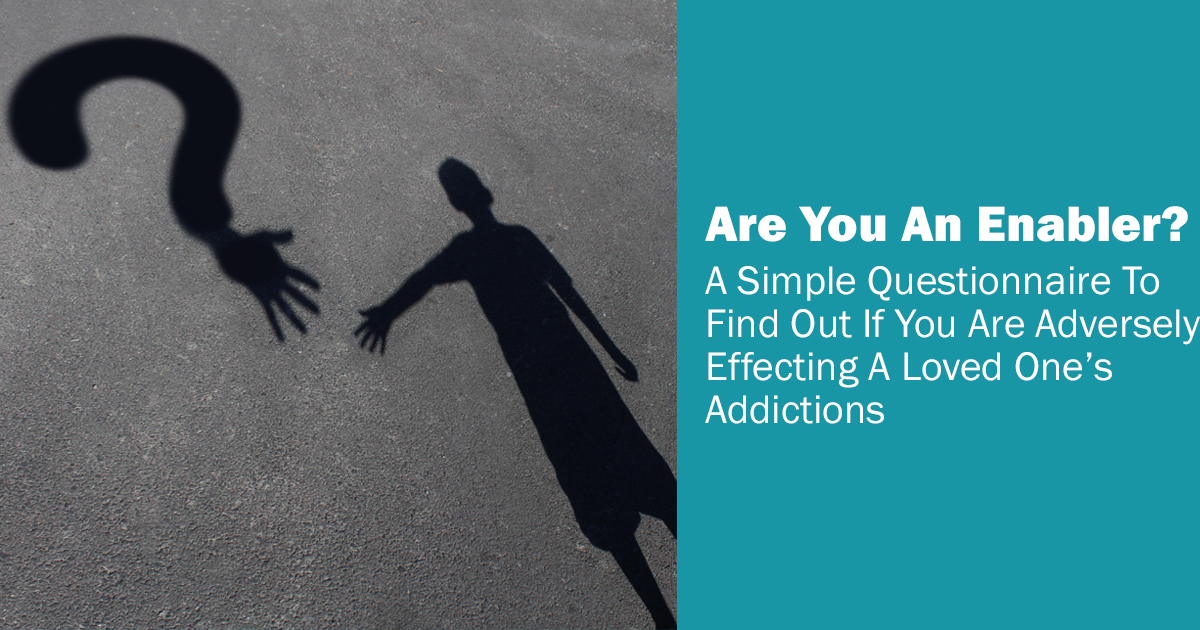
 To understand if you might possibly be enabling someone’s substance abuse and preventing them from seeking the addiction treatment they need, answer these questions with a “yes” or a “no”:
Are You An Enabler? : A Simple Questionnaire
- Do you call in sick for your loved one because they were too hung over to go to work or school?
- Have you ever told a lie to someone to cover up for your loved one’s substance abuse?
- Have you had to pay bills for your loved one that they were responsible for?
- Have you ever done someone else’s work for them because they failed to complete it as a result of their substance abuse?
- Have you ever paid legal fees for your loved one or bailed him or her out of jail?
- Do you avoid talking you your loved one about their substance abuse because you are afraid of how they will react?
- Have you threatened to leave your loved one because of their substance abuse and then did not follow through on it?
 If you answered “yes” to any of these questions, then it is quite possible you are enabling someone’s substance abuse problem and standing in the way of them seeking the addiction treatment they need. Addiction is a family disease and denial is a large part of it. Denial of a substance abuse problem happens for both the addict and their loved ones when the issue is not confronted.
Enabling creates an environment in which an addict can comfortably continue to engage in negative and risky behavior without consequences. “Helping” someone means we are doing something for someone who is incapable of doing it for themselves. “Enabling” is doing something for someone when they should have done it for themselves. This will prevent change and a desire to seek addiction treatment.
While enabling is a behavior that loved ones learn for their own emotional survival, it also prolongs the problem of substance abuse. Don’t be part of the problem, be part of the solution and help your loved one seek out the addiction treatment they need.