

Kratom’s active alkaloids can stay in your system anywhere from 24 hours to 90 days, depending on the test used and how often you use it. Urine testing detects metabolites for 2, 14 days, blood tests capture active alkaloids within a narrow 24, 48 hour window, and hair follicle testing extends detection up to 90 days. Your metabolism, body weight, and usage frequency all influence these timelines when determining how long kratom stay in your system, factors worth understanding before your next test.
How Long Does Kratom Stay in Your System?
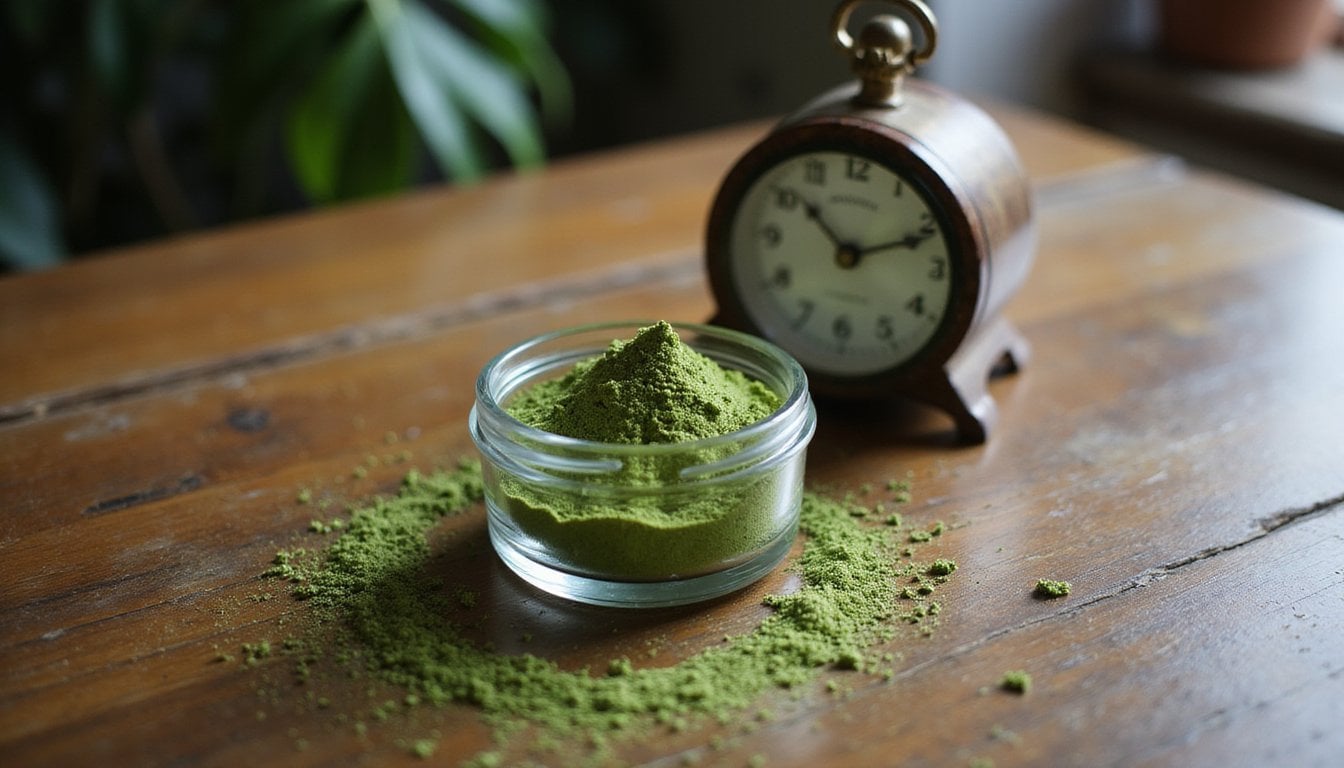
How long kratom stays in your system depends on the detection method, your usage patterns, and individual physiological factors. Kratom detection time varies across testing types: urine tests detect it for 1, 7 days in most users, while chronic users may test positive for up to two weeks. Blood tests show a shorter window of 24, 48 hours, and saliva tests detect recent use within 24, 36 hours. Hair follicle testing extends detection up to 90 days.
The kratom half life of its primary alkaloid, mitragynine, is approximately 23, 24 hours. Full elimination typically takes around five half-lives, or roughly 5 days for occasional users. Frequent use causes accumulation, substantially extending clearance time. Your metabolism, dosage, age, weight, and liver function all influence how quickly your body eliminates kratom.
Kratom’s active compounds, mitragynine and 7-hydroxymitragynine, interact with opioid receptors in the brain, producing effects that range from pain relief and mood enhancement to relaxation depending on the dose.
Does Kratom Show Up on a Standard Drug Test?
Most standard drug tests won’t detect kratom because they’re designed to screen for a fixed set of controlled substances. The standard 5-panel kratom drug test targets marijuana, cocaine, amphetamines, opiates, and PCP, not kratom alkaloids. Even extended 10- and 12-panel panels exclude mitragynine and 7-hydroxymitragynine. However, understanding the effects of kratom on health is still essential for consumers and healthcare providers alike. Research has shown that while some users report benefits such as pain relief and anxiety reduction, there are potential risks and side effects that must be considered. As more individuals turn to kratom, it becomes increasingly important to investigate its long-term impact on overall health and well-being.
| Test Type | Detects Kratom | Notes |
|---|---|---|
| 5-Panel | No | Most common employment screen |
| 10/12-Panel | No | Adds benzos, barbiturates |
| Immunoassay (Urine) | Yes | 5 ng/mL cutoff, ~5-day window |
| LC, MS/MS | Yes | Gold standard confirmation method |
Specialized testing requires a specific laboratory request. If you’re subject to military screening, probation, or addiction treatment monitoring, kratom-specific panels may be used. Routine employment screenings will almost always return negative for kratom regardless of recent use. Kratom’s active alkaloids interact with opioid receptors in the brain, which is part of why some lower-quality immunoassays have occasionally misidentified it as methadone or tramadol.
Kratom Detection Windows in Urine, Blood, Hair, and Saliva

When kratom enters your system, its metabolites become detectable across multiple biological matrices, each with distinct windows tied to the compound’s pharmacokinetics. Urine remains the most practical testing medium, where mitragynine metabolites can persist up to seven days for occasional users and up to two weeks for heavy users, depending on test sensitivity and individual metabolism. Blood and saliva offer much narrower windows of 24, 48 hours, while hair follicle testing extends detection substantially, capturing evidence of frequent use for up to 90 days. Standard drug tests, such as 5-panel and 10-panel screenings, do not typically include kratom, meaning specialized tests are required to detect its alkaloids, mitragynine and 7-hydroxymitragynine.
Urine Detection Timeline
Urine testing remains the most common method for detecting kratom in the body, and detection windows vary considerably based on how often you use it. If you’re an occasional user, kratom metabolites typically stay detectable for 2 to 5 days. Mitragynine, the primary alkaloid, can persist 1 to 7 days after a single dose. For chronic or heavy users, accumulation of alkaloids extends detectability up to 14 days after your last use.
Standard immunoassay screening applies a 5 ng/mL cutoff, while confirmatory LC, MS/MS testing drops to 1 ng/mL, catching lower-level use with greater precision. Mitragynine’s terminal half-life of approximately 68 hours supports multi-day detectability. Your metabolism, kidney function, dosage, and use frequency all directly influence how long kratom remains in your urine.
Blood And Saliva Windows
Blood testing catches mitragynine within 1, 2 hours of ingestion, but the detection window closes quickly, typically within 24, 48 hours after your last dose. Concentrated extracts with higher mitragynine loads can extend this window modestly beyond standard ranges. Because blood testing is invasive and offers a short detection window, it’s rarely used in routine drug screens.
Saliva testing offers an even narrower window, generally 24, 36 hours post-consumption. Specialized saliva assays for kratom remain uncommon and aren’t included in standard screening panels, making this method most useful only for identifying very recent use.
For both matrices, your liver and kidney function, metabolism rate, dosage, and frequency of use directly influence how long kratom remains detectable. Higher body weight and slower metabolism can extend these windows beyond typical ranges.
Hair Follicle Testing Duration
Hair follicle testing offers the longest detection window of any matrix, up to 90 days, making it the most thorough method for documenting chronic kratom exposure. Alkaloids incorporate into hair shafts over time, allowing analysts to reconstruct your use history through segmented analysis tied to hair length. Validated LC, MS/MS methods detect mitragynine at 0.05 pg/mg and 7-hydroxymitragynine at 0.2 pg/mg, with forensic case concentrations ranging from 16 to 2,067 pg/mg for mitragynine.
Hair testing isn’t routine, major reference laboratories rarely offer it, and it’s typically reserved for legal or forensic contexts. The first lab-based kratom hair test was developed by USDTL. If you’re subject to this type of testing, even past exposure from months prior can remain documentable depending on your hair length and the segments analyzed.
How a Urine Drug Test Detects Kratom

When a urine test screens for kratom, it targets two primary alkaloids, mitragynine and 7-hydroxymitragynine, using either immunoassay or liquid chromatography-tandem mass spectrometry (LC-MS/MS). These tests detect metabolites, not the parent drug, enabling multi-day detectability after your last dose. When a urine test screens for kratom, it targets two primary alkaloids, mitragynine and 7-hydroxymitragynine, using either immunoassay or liquid chromatography, tandem mass spectrometry (LC-MS/MS). These tests detect metabolites rather than the parent compound, allowing for multi-day detectability after your last dose. Understanding the mechanism of kratom in the brain provides context for this process, as these alkaloids interact with neurological pathways before being metabolized and eliminated, leaving detectable biomarkers in the body.
| Test Method | Cutoff Level |
|---|---|
| Immunoassay | 5 ng/mL |
| LC-MS/MS confirmation | 1 ng/mL |
| Occasional user window | Up to 7 days |
| Chronic user window | Up to 9, 14 days |
Standard 5-panel tests don’t screen for kratom. Detection only occurs when a laboratory explicitly orders kratom-specific testing. LC-MS/MS provides structural specificity, distinguishing kratom alkaloids from opioids. Labcorp and MedTox both offer this specialized screening protocol.
What Blood and Saliva Tests Can and Cannot Reveal
If you’re considering blood or saliva tests to detect kratom, you’ll find both methods carry significant limitations compared to urine testing. Blood tests can detect mitragynine within 1, 2 hours of ingestion, but the detection window closes rapidly, typically within 24, 48 hours, making this method unreliable for identifying use beyond the immediate period. Saliva testing via LC-MS/MS can capture mitragynine and 7-hydroxymitragynine shortly after use, but the window rarely extends beyond 24 hours and produces discordant results when compared against urine, limiting its forensic and clinical utility.
Blood Test Detection Limits
Blood and saliva tests detect kratom’s active alkaloids within a narrow window, making them most useful for identifying recent use rather than long-term patterns. For blood testing, immunoassay screening can detect mitragynine at concentrations as low as 5 ng/mL, while LC-MS/MS confirmation methods reach down to 1 ng/mL, capturing even low-level exposure. These tests identify both the parent compound and its metabolites, making them more sensitive than routine panels.
Mitragynine’s half-life runs approximately 68 hours at steady state, meaning concentrations decline gradually but remain detectable for up to 48 hours in heavy users. Blood tests are typically reserved for accidents or legal cases due to their invasive nature. If you’re facing such testing, knowing these cutoffs helps you understand what the results actually indicate.
Saliva Testing Reliability Issues
Saliva tests offer a narrow detection window for kratom’s active alkaloids, typically spanning minutes to 48 hours after ingestion, though most commercial panels can’t reliably detect mitragynine or 7-hydroxymitragynine at all. Unlike urine tests that capture metabolites over days, oral fluid retains parent alkaloids briefly before concentrations drop below detectable thresholds. Specialized labs like Aegis use LC-MS/MS with lab-specific cutoffs to confirm recent exposure, making mass spectrometry the only dependable method for oral fluid analysis. You might encounter discordant results where a saliva test returns positive while a concurrent blood test reads negative, reflecting each matrix’s distinct detection timing. Because of its short window and limited commercial availability, saliva testing isn’t practical for documenting historical kratom use or identifying patterns of frequent consumption.
Can a Hair Follicle Test Find Kratom Use?
Hair follicle testing can detect kratom use up to 90 days after ingestion, making it one of the longest detection windows available. Mitragynine deposits into hair follicles during growth, creating a biological timeline of your use. LC, MS/MS methods achieve detection limits as low as 0.05 pg/mg for mitragynine in hair.
Key technical realities you should understand:
- Hair grows approximately half an inch monthly, encoding roughly 30 days of exposure per segment
- Forensic cases show mitragynine concentrations ranging 16, 2,067 pg/mg
- Chronic use increases alkaloid accumulation, extending detectability
- Specialized labs like USDTL developed the first validated hair tests for mitragynine
However, standardized kratom hair testing remains rare. Most major laboratories don’t include kratom in standard panels, limiting its practical application outside forensic contexts.
The Tests That Can Actually Detect Kratom
If you’re concerned about kratom showing up on a drug test, you need to understand that standard 5-10 panel screens won’t detect it. Specialized laboratory methods, specifically LC-MS/MS or GC-MS techniques, are required to identify mitragynine and its metabolites in your system. Without these advanced analytical tools, kratom use goes undetected, making the type of test administered a critical factor in any screening outcome.
Specialized Testing Methods Required
Standard drug panels won’t catch kratom, you’ll need specialized testing methods that target the plant’s active alkaloids directly.
Labs deploy distinct approaches depending on the scenario:
- Immunoassay screening flags mitragynine at a 5 ng/mL cutoff using ELISA kits, but cross-reactivity requires confirmatory follow-up.
- LC-MS/MS serves as the gold standard, confirming mitragynine at 1.0 ng/mL with structural specificity that distinguishes kratom alkaloids from opioids.
- GC-MS quantifies and separates mitragynine diastereomers, offering forensic-grade precision comparable to LC-MS/MS.
- Oral fluid testing via mouth swab detects mitragynine within minutes to 48 hours, making it ideal for recent-use workplace scenarios.
Each method targets kratom’s unique chemical fingerprint, ensuring accurate identification rather than relying on broad-spectrum opioid panels.
Standard Tests Miss Kratom
Why do most drug tests fail to catch kratom? Standard 5-panel and 10-panel screens don’t include mitragynine or 7-hydroxymitragynine in their immunoassay panels. These tests target opioids, THC, cocaine, and amphetamines, not kratom alkaloids. Over-the-counter urine tests lack mitragynine-specific reagents entirely, producing false negatives even with heavy use.
Blood tests rarely screen for kratom because the detection window is only 24, 48 hours, making routine checks impractical. Saliva tests share similar constraints, detecting use within just 1, 3 days and requiring specialized swabs. Hair follicle tests theoretically identify 90 days of use but aren’t standard in employment screens.
To detect kratom, labs must use LC-MS/MS technology, a specialized method absent from routine workplace and at-home testing protocols.
How Your Body Weight and Metabolism Affect Kratom Detection
When it comes to kratom detection, your body weight and metabolism play a central role in determining how long mitragynine and its metabolites remain detectable. Kratom’s lipophilic alkaloids accumulate in fatty tissues, meaning your body composition directly influences elimination speed.
Your body weight and metabolism directly shape how long kratom’s alkaloids remain detectable in your system.
Key factors shaping your detection window include:
- Higher BMI stores mitragynine in fatty tissues, extending urine detection up to 7, 9 days.
- Slower metabolism prolongs metabolite presence, as kratom carries an approximate 24-hour half-life that varies individually.
- Elevated body fat percentage mirrors marijuana’s retention pattern, delaying clearance extensively.
- Age and liver enzyme activity (CYP450) alter metabolic efficiency, further extending retention.
Leaner individuals with faster metabolisms excrete kratom considerably quicker than those carrying higher fat percentages.
Why Heavy Users Stay Positive Longer
Chronic kratom use fundamentally changes how long mitragynine stays detectable in your system. When you dose repeatedly, mitragynine accumulates faster than your body eliminates it, extending detection windows substantially. Single use clears urine within 1, 7 days, but heavy, chronic use pushes that window past two weeks. Your liver’s CYP enzyme activity struggles to keep pace with continuous high-dose intake, slowing clearance considerably.
Kratom’s fat-soluble nature compounds this problem. Your body stores excess mitragynine in fatty tissue, releasing it gradually back into circulation. High-dose users also face strain-specific differences, red vein varieties carry higher alkaloid loads, lingering longer than white or green strains. Hair follicle tests reflect this accumulation most dramatically, detecting mitragynine up to 90 days in long-term heavy users.
How to Clear Kratom From Your System Faster
Clearing kratom from your system faster depends on targeting the biological mechanisms that govern mitragynine’s metabolism and elimination. Your liver, kidneys, hydration status, and metabolic rate each directly influence how quickly alkaloids are processed and excreted.
Clearing kratom faster means targeting the liver, kidneys, hydration, and metabolism, the systems controlling how alkaloids are eliminated. Implementing a kratom detox protocol can enhance these processes by introducing supportive nutrients and optimizing hydration levels. Additionally, certain herbs and supplements can facilitate liver function, promoting faster elimination of residual compounds. This comprehensive approach not only aids in detoxification but also supports overall wellness during the recovery phase.
- Hydrate consistently, Steady fluid intake optimizes kidney filtration, diluting urine and shortening detection windows.
- Exercise regularly, Cardiovascular activity elevates metabolic rate, accelerating mitragynine breakdown and circulatory clearance.
- Support liver function, Antioxidant-rich foods and eliminating alcohol protect enzymatic pathways responsible for alkaloid metabolism.
- Reduce dosage and frequency, Lower doses clear in 2, 3 hours of active effects; tapering prevents alkaloid accumulation.
Combining these strategies addresses elimination from multiple physiological angles, producing meaningfully faster clearance than any single approach alone.
Kratom Stays in Your System Longer Than You May Realize
If you have been wondering how long kratom lingers in your body, it may be time to ask yourself a deeper and more important question about how much control kratom truly has over your life. When substances have silently wrapped themselves around your daily existence and stolen the peace and freedom you deserve, know that you do not have to face this alone, and Pathways Rehab in Sacramento is here to walk beside you with premium healing, life changing recovery programs, and deeply personalized addiction care crafted for both men and women. Our outpatient rehab sacramento california program delivers compassionate and structured support with flexible daytime intensive outpatient program designed to fit perfectly around your daily routine. Call us today at (916) 545-8495 and take the first step toward freeing your body and reclaiming the life you were always meant to live.
Frequently Asked Questions
Can Kratom Use Affect the Results of a Liver Function Test?
Yes, kratom use can notably affect your liver function test results. It elevates key enzymes like ALT, AST, and alkaline phosphatase while increasing bilirubin levels, indicating hepatocellular and cholestatic injury patterns. You’ll typically see these abnormalities within one to eight weeks of regular use. Your results may show a mixed injury pattern distinctive to drug-induced liver injury, and continued use can exacerbate these markers, potentially progressing toward acute liver failure.
Does Kratom Interact With Medications That Influence Drug Test Results?
Based on available evidence, kratom-specific tests don’t show cross-reactivity with common medications. When you take kratom, specialized assays like LC-MS/MS identify mitragynine and 7-hydroxymitragynine through structural specificity, distinguishing them from opioids or other compounds. No documented evidence suggests medications alter kratom-specific test results. However, your liver function, potentially affected by medications, can influence how quickly you metabolize kratom, indirectly affecting detection windows by slowing or accelerating alkaloid clearance.
Are There Any Legal Consequences for Testing Positive for Kratom?
If you test positive for kratom, the legal consequences depend heavily on your location and circumstances. You won’t face federal penalties since kratom remains unscheduled in the U.S., but you could face termination if your employer enforces zero-tolerance policies. If you’re on probation, parole, or serving in the military, a positive result may trigger serious disciplinary or legal action. In states like Alabama or Arkansas, possession itself carries legal consequences.
Can Secondhand Exposure to Kratom Cause a Positive Drug Test Result?
Secondhand exposure to kratom won’t cause a positive drug test result. You’d need to directly ingest kratom for its alkaloids, mitragynine and 7-hydroxymitragynine, to reach detectable levels in your system. Passive contact doesn’t produce sufficient alkaloid concentrations for even specialized LC-MS/MS tests to flag. However, you could test positive if you consume a kratom product contaminated with adulterants like opioids, which standard panels do detect.
Does Kratom Use During Pregnancy Affect How Long It Stays Detectable?
Yes, pregnancy affects kratom’s detectability in important ways. When you use kratom during pregnancy, it doesn’t just stay in your system, it also accumulates in umbilical cord tissue, extending the detection window beyond typical timeframes. Specialized LC-MS/MS testing can identify mitragynine and speciociliatine in cord tissue at just 1 ng/mL, reflecting your third-trimester exposure. Standard urine detection reaches up to 9 days, but umbilical cord testing captures a much longer prenatal exposure window.